
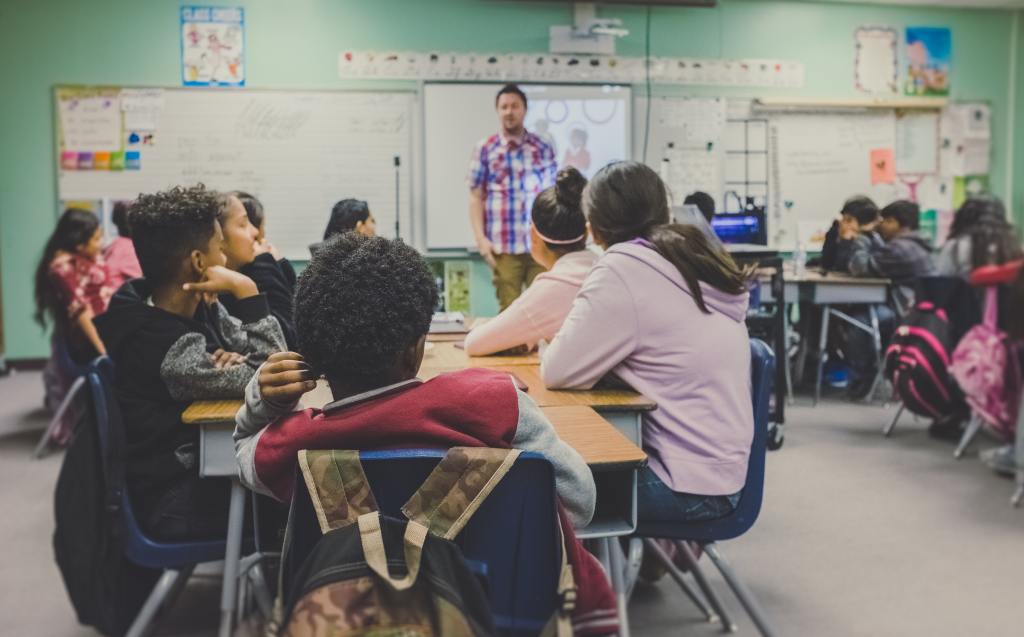
Arizona and Florida have lowered their requirements for K-12 teacher certification. Arizona has removed the requirement of a completed bachelor’s degree and will instead allow teachers enrolled in a teacher prep to practice in a classroom under supervision of a certified K-12 educator except on an emergency basis (read the story here). In Florida, military veterans and their spouses will be eligible to obtain a certification prior to receiving a bachelor’s provided they have obtained at least 60 credit hours from a college or university (read the story here). Both of these policies are ostensibly to combat teacher shortages, which both states are experiencing. By expanding the pool of prospective teachers, the states are hoping to reduce the shortage.
- The Florida policy is a nakedly obvious political ploy by Ron DeSantis. This policy has clearly been designed to appeal to people who believe that a policy like this is “supporting the troops” or “supporting veterans.” However, this policy does not truly support either group. Teaching is a hard profession. There are a lot of pressures, and the environment can be pretty unforgiving at times. In my experience as a special educator, it can often feel as though you are being pulled in several different directions at once. You are trying to meet the needs of the school, the students, the district, and the state all at once. It can feel overwhelming. As one teacher who had not obtained a teaching certification prior to practicing in the classroom said: “The first semester was so stressful and discouraging to me that I was semi-dreading coming back from the Christmas break. I had already pretty much figured out that teaching was not for me, and I was just discouraged” (Clement & Cochran 2020, p. 52). The authors note that particular teacher ended up leaving the profession after the end of the school year. I believe this policy will be setting veterans and their spouses up to fail only to secure some political points.
- Clement and Cochran noted as well that teachers who had gone through the teacher preparation process had knowledge about classroom management and had better knowledge on how to access support systems at the school. The first year of teaching is extremely difficult and can be very stressful. Being able to access support structures is very important for success for new teachers. If a teacher comes in without the requisite knowledge on how to access those structures I believe that it would have a very detrimental impact on their ability to perform their role adequately.
- There is inconclusive evidence on the effectiveness of alternate routes to special education preparation. Data for general education teachers is likewise inconsistent with some studies in a literature review stating that students in classrooms whose teacher had not obtained a traditional certification had significantly less growth than the students whose teacher had completed a teacher preparation program (Rosenberg & Sindelar 2005). One thing to note is that the authors of this literature review were reviewing research that studied the difference between traditional teacher preparation programs compared to alternative teaching certification programs (such as Teach for America). From what I can tell, these policies are different situations where teachers could get certified without passing any type of certification process.
- A cursory search of the research showed that most research compared alternative teaching certification programs with traditional programs. There appeared to be very little data regarding how teachers who lack any kind of certification performed in their classrooms. Perhaps there is literature that I am currently unable to find, but it seems more likely that there is little data on this problem.
- According to this article is not clear if these policies will satisfy IDEA requirements (Arundell 2022). This could potentially be a serious problem as it would mean teachers hired under these policies would automatically put their schools’ special education programs out of compliance. Students who receive special education services need teachers who have additional expertise and have extensive knowledge in not only the pedagogy and content, but also how their students’ disabilities impact their access to the curriculum. These teachers require more training, not less and I believe putting an unqualified teacher in that situation will result in a very negative educational experience for the teacher and the students.
- I was only able to find one research article whose data might suggest that non-certified teachers perform at the same level as teachers who have received a K-12 certification. It is important to note that this research study received funding from the Fordham Institute, which is a conservative think tank who strongly advocates for the privatization of schools (Melvin & Smith 2021). However, the study still found that students who were in a mathematics classroom whose teacher was certified in mathematics performed better on assessments than students whose teachers were not (Goldhaber & Brewer 2000). This is not surprising as teaching involves not only an understanding of the content, but also knowledge of the pedagogy and theory behind the practice.
- As a final note, I question why lowering qualification requirements is the path that these states took to try to address their teacher shortage. Why not do things that would attract more qualified teachers to the schools? Things like increasing pay for teachers or improving their working conditions could potentially solve the teaching shortage problem without creating additional issues. I also believe that this policy communicates to all the highly qualified and certified teachers in those states that they are not truly valued which could cause them to leave the profession in even greater numbers to pursue higher paying jobs with better working conditions.
There appears to be little evidence that these policies will result in a positive outcomes for students. While the teacher shortage is a serious problem, I do not think that trying to lowering the qualifications will actually solve it. In fact, it would likely have pretty negative consequences not just for the teachers, but also for the students. As Rosenberg & Sindelar stated:
A number of years ago, the U.S. Department of Agriculture was concerned that free and reduced-price lunches lacked fruits and vegetables. Rather than increasing portions, it was suggested that the ketchup in the lunches be counted as a vegetable. Not surprisingly, the general public was shocked and outraged that a governmental agency responsible for children’s health would attempt to represent ketchup as a vegetable.
Rosenberg & Sindelar (2005 p. 125)
We are now being told that someone trained to be a special education teacher through an alternative route is as highly qualified as a graduate of a traditional teacher-training institution. Is this another condiment being passed off as a vegetable?
References
Arundel, K. (2022, July 27). Law leaves little wiggle room for Loosening Special Ed teacher requirements. K. Retrieved July 27, 2022, from https://www.k12dive.com/news/not-much-wiggle-room-for-loosening-special-ed-teacher-requirements/628212/
Clement, M. C., & Cochran, J. (2020). A Sharp Contrast: First-Year Teachers With and Without Teacher Preparation. Delta Kappa Gamma Bulletin, 87(1), 51-56.
Cutler, A., & Gartner, J. (n.d.). Educators no longer need college degree to teach in Arizona public schools. https://www.kktv.com. Retrieved July 27, 2022, from https://www.kktv.com/2022/07/09/educators-no-longer-need-college-degree-teach-arizona-public-schools/
Goldhaber, & Brewer, D. J. (2000). Does teacher certification matter?: High school teacher certification status and student achievement. Educational Evaluation and Policy Analysis, 22(2), 129–145. https://doi.org/10.3102/01623737022002129
Melvin, J., & Smith, D. (2021, February 1). When it comes to public education critics, the Fordham Institute deserves closer scrutiny. Ohio Capital Journal. Retrieved July 27, 2022, from https://ohiocapitaljournal.com/2021/02/02/when-it-comes-to-public-education-critics-the-fordham-institute-deserves-closer-scrutiny/
Rawls, M. (2022, July 23). Florida to allow military veterans teach in schools with no degree. The Root. Retrieved July 27, 2022, from https://www.theroot.com/florida-to-allow-military-veterans-teach-in-schools-wit-1849320194
Rosenberg, & Sindelar, P. T. (2005). The Proliferation of Alternative Routes to Certification in Special Education: A Critical Review of the Literature. The Journal of Special Education, 39(2), 117–127. https://doi.org/10.1177/00224669050390020201
 The Mann Cave Blog