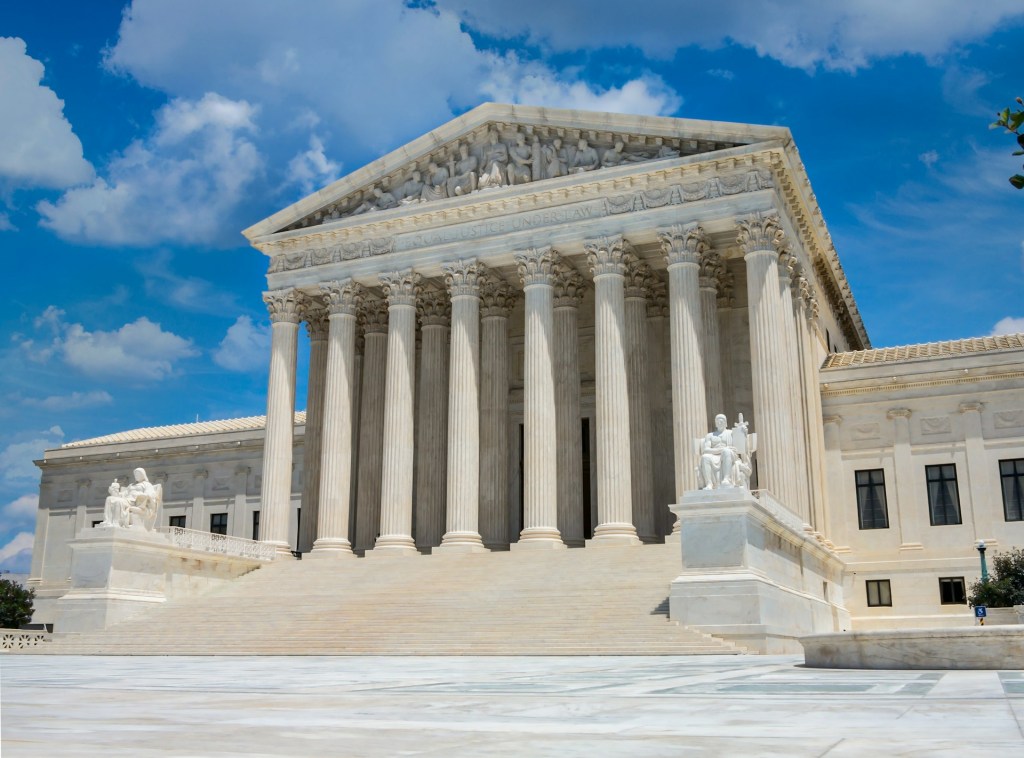
Photo by Fine Photographics on Unsplash
As expected yesterday morning, the Supreme Court upheld the TikTok ban law. With more than 100 million users in this country, people were understandably frustrated. This post is not to debate the merits of that decision, I will let the lawyers discuss that. Do I like the ban? No. Do I think its a good thing? Probably not, but I do not think that I possess the expertise to comment on what this means going forward
What I do want to comment on, however is this phenomenon that has been occurring over the past few weeks. That is a great deal of TikTok users migrating from that app to Red Note, an app from what I understand is directly owned by the Chinese government. Many of them are rightfully upset that the United States Government is restricting access to one social media app company while simultaneously allowing companies like Twitter (If I still call them the Hancock and Sears Towers, I will still call it Twitter), Amazon, and Meta to run roughshod over any notion of privacy and free speech in American life. And so, instead of going to one of those platforms, many people have decided to go to the platform that is essentially an extension of state run media. I think that this is a colossally stupid thing to do.
In previous posts, I have discussed the dangers of cynicism (read them here and here). It blinds us to our reality and hampers our ability to think critically. When we give in to cynicism we start to lose our ability to work towards a common goal, but instead focus our efforts on punishing those who we have deemed to have hurt us. It is obvious how destructive this kind of behavior can be, and following its logical path, this behavior only ends with “burning it all down.” To some, this may sound wonderful, but when one actually starts to consider who would get burnt if structures stopped performing their purpose, the sheen starts to wear off a little.
This is why I think that the shift by many on the left to Red Note is a folly. It is done out of a desire to chastise the U.S. government and Big Tech, but all it will accomplish will be to hurt ourselves. Instead of working to build coalitions, it will cause us to fracture them. Instead of working to understand and find common ground with potential allies, we will maintain our ignorance and push them away in favor of shouting into the void. Instead of resisting the U.S. government, they will instead engage directly with state-sanctioned short-form content. This does not seem like a well thought out plan and I think that it is a result of many people being cynical to the point that they have stopped assessing their actions critically.
From my view, there is no positive result that can emerge from us reacting cynically. Tran et al (2022) have noted that acting in a cynical manner often causes people to act in ways that damage causes that could actually improve their situation. Aslam et. al (2016) found that even customers may try to ‘punish’ customer service representatives even when that representative is genuinely trying to repair a damaged relationship. Cynicism only breeds distrust, and distrust only breeds more distrust.
This is not to say that content creators should go running back to Facebook, Youtube, Instagram, Twitter, or any of the other social media apps. There are many, many valid reasons to abstain from posting there and providing them with your data. There are even more valid reasons to not provide them with your attention. However, engaging in actions that may damage you or your community in the name of ‘punishing’ others is not actually helpful to anyone. In fact, it is indicative of not critically assessing and reflecting on our own actions.
Is starting a Red Note account, by itself, going to ruin your community? No, absolutely not. However, is acting out of cynicism going to harm those around you? Yes.
References:
Aslam, U., Ilyas, M., Muhammad, K. I., & Ubaid- Ur- Rahman. (2016). Detrimental effects of cynicism on organizational change. Journal of Organizational Change Management, 29(4), 580-598. https://doi.org/10.1108/JOCM-12-2014-0231
Tran, H., Strizhakova, Y., Usrey, B., & Johnson, S. (2022). Consumer cynicism in service failures. Psychology & Marketing, 39(2), 346–359. https://doi.org/10.1002/mar.21599
 The Mann Cave Blog